

The world is changing quickly, and technology has become an important part of almost every area of life. From education and communication to business and employment, digital tools are now used everywhere. For students, understanding how to use these tools is no longer just an advantage—it can become an important part of preparing for the future.
Learning a digital skill can help students become more confident, productive, and prepared for modern career opportunities. Whether a student is interested in marketing, technology, design, business, education, or another field, having useful digital skills can make it easier to learn, work, and communicate in today’s digital world.
The good news is that students don’t need to become technology experts overnight. They can start with one skill, practice regularly, and gradually build a strong collection of abilities.
Here are ten powerful reasons why learning a digital skill can be valuable for students.
1. Digital Skills Prepare Students for the Modern Workplace
Technology is now part of almost every workplace. Employees may use computers, online communication platforms, spreadsheets, project management tools, websites, or other digital software depending on their job.
This means students who develop digital skills before entering the workforce can feel more comfortable with technology.
For example, basic skills such as using spreadsheets, creating presentations, managing documents, communicating through professional platforms, and conducting online research can be useful in many different jobs.
Students don’t necessarily need to learn everything. Starting with one useful digital skill and developing it properly can already provide a strong foundation.
2. They Can Open More Career Opportunities
One of the biggest advantages of learning a digital skill is the variety of career opportunities it can support.
Depending on their interests, students can learn skills such as:
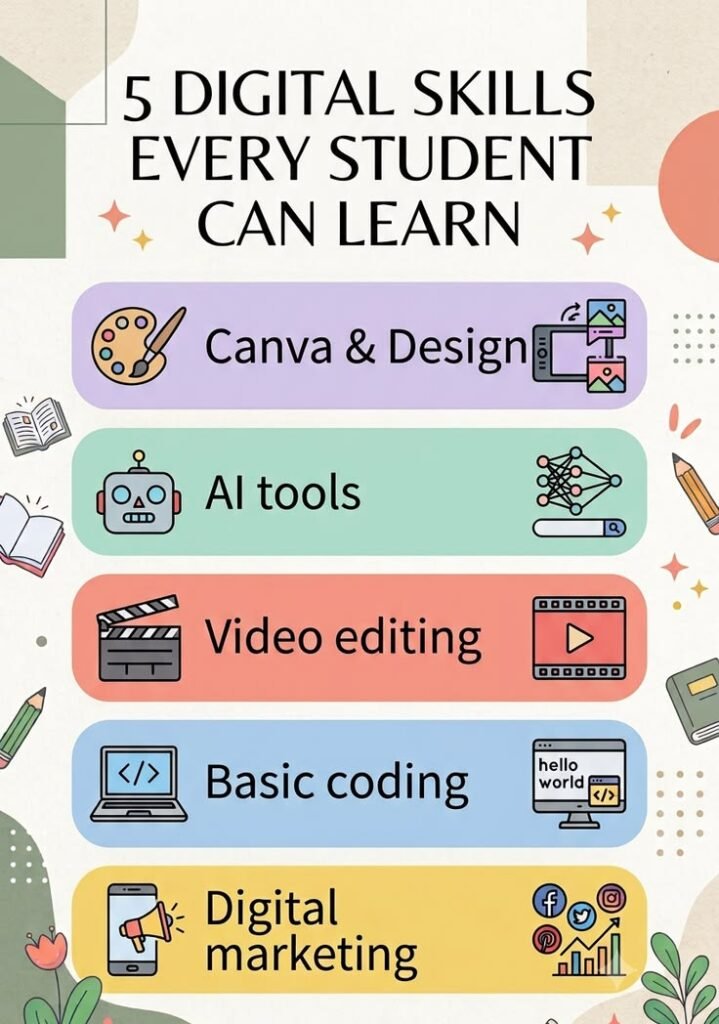
- Digital marketing
- Search engine optimization
- Content writing
- Graphic design
- Video editing
- Web design
- Data analysis
- Social media management
- Email marketing
- Basic coding
These skills can be useful in different industries. A student interested in creativity might explore graphic design or content creation, while someone interested in business could explore digital marketing or data analysis.
Learning a skill doesn’t guarantee a particular job, but it can give students practical abilities that they can demonstrate through projects and portfolios.
3. Digital Skills Help Students Learn More Independently
The internet has made learning more accessible than ever before.
Students can find tutorials, courses, articles, videos, online libraries, and educational platforms covering thousands of subjects.
However, simply having access to information isn’t enough. Students also need to know how to search for reliable information, use digital tools, organize resources, and learn independently.
Developing a digital skill can encourage students to become more comfortable with self-learning.
For example, someone learning Canva can practice by creating different designs. A student learning SEO can create a small blog and experiment with keywords. Someone interested in video editing can create short practice videos.
This type of practical learning can complement traditional education.
4. They Improve Productivity
Digital tools can help students organize their studies and daily activities more effectively.
For example, students can use calendars to manage deadlines, note-taking applications to organize information, cloud storage to save documents, and spreadsheets to track tasks.
Learning how to use these tools properly can save time and reduce unnecessary effort.
Even a simple digital skill, such as creating a well-organized spreadsheet, can be useful for managing assignments, budgets, projects, or personal goals.
The goal isn’t to use technology for everything. Instead, students should learn how to use the right digital tools when they can genuinely make a task easier.
5. Digital Skills Can Build Confidence
Technology can sometimes feel confusing when you are unfamiliar with it. A task that looks difficult at first can become much easier after learning the basic steps.
This is one reason learning a digital skill can improve confidence.
Imagine a student who has never designed anything before. After learning the basics of Canva, they may be able to create a presentation, poster, social media graphic, or simple portfolio.
Similarly, someone who learns basic website building may eventually create their own website.
Every new skill provides an opportunity to practice problem-solving and become more comfortable with technology.
6. They Help Students Build a Strong Portfolio
A resume can tell employers what a student knows, but a portfolio can show what they can actually do.
This is especially useful for digital careers.
For example, a student interested in digital marketing could create:
- Sample blog posts
- SEO-optimized articles
- Social media designs
- Content calendars
- Keyword research examples
- Mock marketing campaigns
A graphic design student could show logos, posters, social media graphics, and other projects.
A web design student could build sample websites.
These projects provide practical evidence of a student’s abilities. Even when students don’t have professional experience yet, personal and academic projects can help demonstrate their skills.
7. Digital Skills Encourage Creativity
Technology isn’t only about numbers and technical tasks. Many digital careers require creativity.
Content creation, graphic design, video editing, advertising, website design, and social media marketing all involve creative thinking.
Students can use digital tools to turn their ideas into something visual, interactive, or informative.
For example, a student who enjoys photography could learn photo editing. Someone interested in writing could start a blog. A person who enjoys design could experiment with Canva.
This allows students to combine creativity with technology and potentially discover interests they didn’t know they had.
8. They Can Help Students Build a Personal Brand
Students don’t have to wait until they have a full-time job to start building their professional presence.
Platforms such as LinkedIn and personal websites can help students showcase their interests, skills, projects, and achievements.
A student interested in digital marketing, for example, could share useful marketing tips, publish articles, or display projects they have completed.
Over time, this can help create a professional identity online.
However, building a personal brand doesn’t mean trying to become famous. It simply means presenting your skills and interests professionally so that people can understand what you are capable of.
9. Digital Skills Can Support Freelancing and Entrepreneurship
Some digital skills can also be useful for freelancing or starting a small online business.
For example, someone with skills in writing might offer content-writing services. A designer might create social media graphics for small businesses. Someone familiar with digital marketing could help businesses improve their online presence.
Students can explore these possibilities gradually while continuing their education.
The important thing is to develop real skills first. Instead of focusing only on making money quickly, students should focus on learning, creating quality work, understanding clients, and building experience.
This approach can create a stronger foundation for future opportunities.
10. Digital Skills Prepare Students for the Future
Technology will continue to change, and new tools will appear over time.
Students who develop the habit of learning new digital skills may find it easier to adapt when technology changes.
For example, artificial intelligence is already changing the way people write, design, research, analyze information, and complete many workplace tasks.
This doesn’t mean students need to learn every new tool that appears. Instead, they should develop the ability to understand new technology, learn how to use it responsibly, and combine it with human skills such as creativity, communication, critical thinking, and problem-solving.
Being adaptable can be one of the most valuable skills in a changing digital world.
Which Digital Skill Should Students Learn First?
There is no single digital skill that is perfect for every student.
The best choice depends on a student’s interests and career goals.
If you enjoy writing, content writing and SEO could be good areas to explore.
If you enjoy designing, graphic design and Canva may be interesting.
If you like social media and business, digital marketing and social media management could be useful.
If you enjoy technology and logical problem-solving, you might explore coding, web development, or data analysis.
If you enjoy videos and storytelling, video editing and content creation could be a good starting point.
You don’t need to choose the perfect skill immediately. Start with something that interests you and give yourself time to understand whether you enjoy it.
How Can Students Start Learning a Digital Skill?
The easiest way to begin is to choose one skill instead of trying to learn everything at once.
Start with the basics and use free tutorials, educational websites, online courses, and practical exercises.
Most importantly, practice what you learn.
For example, if you’re learning graphic design, don’t just watch tutorials. Create your own posters and social media graphics.
If you’re learning writing, write articles regularly.
If you’re learning digital marketing, create a sample marketing campaign.
If you’re learning web design, build a simple website.
Practical projects turn knowledge into actual ability.
Students should also keep examples of their best work. These projects can eventually become part of a portfolio that they can show during internships, freelance opportunities, or job applications.
Final Thoughts
Learning a digital skill can be one of the smartest ways for students to prepare for a changing world. It can improve confidence, support independent learning, encourage creativity, and introduce students to a wide range of career possibilities.
The most important thing is not to learn every technology available. Instead, choose one skill that interests you, learn the basics, practice consistently, and gradually move toward more advanced projects.
Whether you choose digital marketing, content writing, graphic design, video editing, web development, data analysis, or another area, the journey starts with a single skill.
You don’t have to know everything today. Start small, keep learning, and allow your skills to grow over time.
In a world where technology continues to influence education, careers, and everyday life, developing a digital skill can give students a valuable foundation for the opportunities of tomorrow.
