


Content creation is one of the most useful skills in today’s digital world. Whether you are a student, office worker, or business owner, creating useful content can help you share your knowledge, connect with an audience, and build a strong online presence.
But getting started can feel confusing. What should you create? Which platform should you use? How can you come up with new ideas? And what skills do you actually need?
The good news is that you do not need expensive equipment or years of experience to begin. With the right content creation process, basic research skills, and a clear understanding of your audience, you can start creating valuable content consistently.
This guide explains content creation in simple terms and shows you how to get started step by step.
What Is Content Creation?
Content creation is the process of planning, producing, and publishing useful or entertaining material for a specific audience. Content can include blog posts, social media posts, videos, images, infographics, presentations, and more.
The main purpose of content creation is to communicate an idea or provide value to an audience. For example, a student might create educational posts about study techniques, while a business owner might create content explaining how their product solves a customer problem.
Good content is not simply about publishing something regularly. It should have a clear purpose and provide information, entertainment, inspiration, or a solution to a problem.
Why Is Content Creation Important?
Content creation is important because people spend a large amount of time consuming digital content. Businesses, professionals, and individuals can use useful content to attract attention and build relationships with their audiences.
Consistent content can help you:
- Build an online presence
- Educate your audience
- Increase brand awareness
- Build trust and credibility
- Generate engagement
- Support digital marketing efforts
- Share your knowledge and skills
For example, a small business selling handmade products can create Instagram posts showing how its products are made. This gives customers more information while making the brand more memorable.
Content Creation vs. Content Marketing
Content creation and content marketing are related, but they are not exactly the same.
| Content Creation | Content Marketing |
|---|---|
| Focuses on producing content | Focuses on using content to achieve marketing goals |
| Includes writing, designing, and producing videos | Includes strategy, distribution, SEO, and promotion |
| Creates the actual content | Uses content to attract and engage an audience |
| Can be done for personal or professional purposes | Usually connected to a marketing objective |
In simple words, content creation is making the content, while content marketing is using that content strategically to reach a goal.
What Are the Different Types of Content?
There are many types of digital content, and you do not have to use all of them. The best format depends on your audience, skills, and goals.
Blog Posts and Articles
Blog posts are written pieces of content that provide information about a particular topic.
For example, a digital marketing beginner could write an article about “Content Creation Tips for Students.” Blog content can also help websites attract people through search engines when it is created around relevant keywords and search intent.
Social Media Content
Social media content includes Instagram posts, carousels, LinkedIn posts, short captions, and other platform-specific content.
For example, a student interested in digital marketing could create LinkedIn posts sharing what they learn during their course.
Video Content
Video is another popular form of content. It can include short videos, tutorials, educational videos, product demonstrations, or longer informational videos.
A beginner does not necessarily need professional equipment. A clear idea, useful information, and good presentation can be more important than expensive equipment.
Visual Content
Visual content includes images, infographics, presentations, charts, and other graphics.
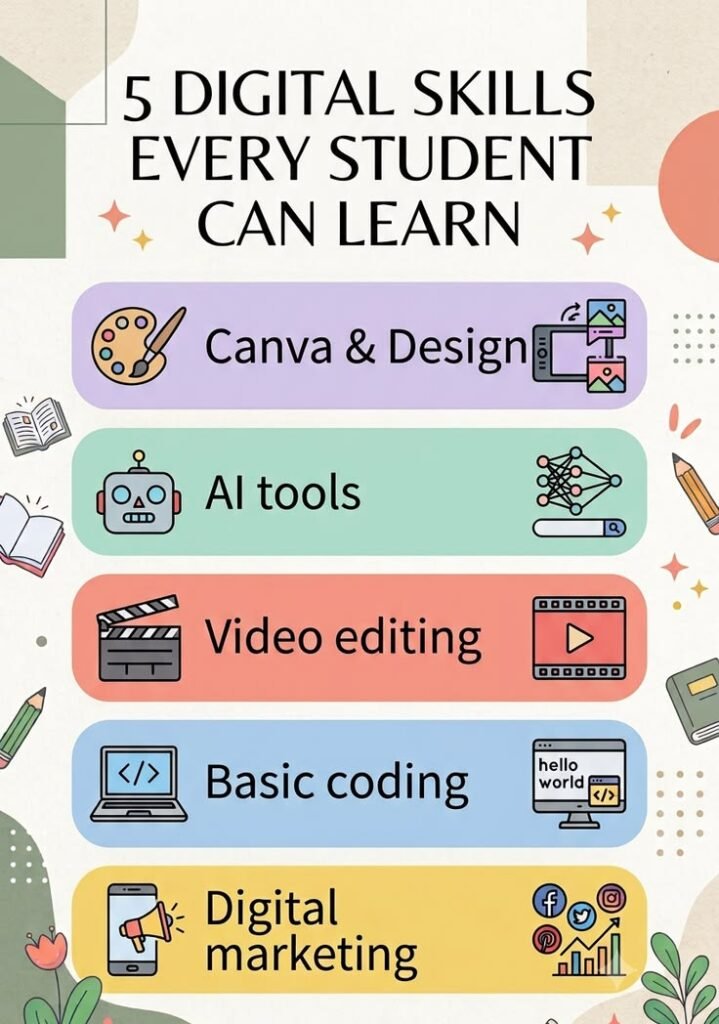
Tools such as Canva can make it easier for beginners to create professional-looking visual content without advanced graphic-design knowledge.
How to Start Content Creation as a Beginner
Starting content creation becomes easier when you follow a simple process instead of trying to create everything at once.
Step 1: Choose Your Topic or Niche
Start by choosing a topic you understand, enjoy learning about, or want to develop expertise in.
Your topic could be:
- Digital marketing
- Education
- Travel
- Technology
- Personal development
- Business
- Career advice
- Fitness and lifestyle
You do not need to know everything about your chosen topic. You can also create content based on what you are learning, as long as you research the information properly and present it honestly.
Step 2: Understand Your Audience
Before creating content, think about who will consume it.
Ask yourself:
- Who is my target audience?
- What problems do they have?
- What questions are they asking?
- What information are they looking for?
- What type of content do they prefer?
For example, content for college students should use simple explanations and practical examples that relate to student life.
Understanding your audience helps you create content that is relevant instead of simply publishing random ideas.
Step 3: Choose the Right Content Format
Once you understand your audience, decide which format works best.
If you enjoy writing, start with blog posts or LinkedIn content. If you prefer speaking and demonstrating ideas, video may be a better option. If you enjoy designing, try social media graphics or infographics.
You can start with one format and expand later.
Step 4: Create and Publish Your Content
Now turn your idea into actual content.
A simple workflow is:
Research → Plan → Create → Edit → Optimize → Publish
For example, if you want to create a blog about content creation skills, research the topic first, make an outline, write the article, edit it for clarity, optimize it for SEO, and then publish it.
Step 5: Analyze and Improve
Publishing content is not the end of the process.
Look at how your content performs. Depending on the platform, you can review views, clicks, engagement, comments, shares, or other available metrics.
If one type of content performs better than another, study why. Use those insights to improve your future content.
Essential Content Creation Skills
Good content creation involves more than simply writing or posting. Developing a combination of skills can help you create better content.
Writing and Copywriting
Strong writing skills help you explain ideas clearly and keep readers interested.
Copywriting is especially useful when your content needs to encourage an action, such as clicking a link, signing up for something, or learning more about a product.
Research Skills
Research helps you create accurate and useful content.
Before publishing information, check reliable sources, understand the topic, and avoid presenting unverified claims as facts.
Good research also helps you discover content ideas, audience questions, and relevant keywords.
Basic Design Skills
Visual presentation can make content easier to understand.
You do not need to become a professional designer. Learning basic principles such as spacing, typography, alignment, and visual hierarchy can significantly improve your content.
SEO Skills
Search engine optimization, or SEO, helps content become easier to discover through search engines.
Basic SEO knowledge includes understanding keywords, search intent, headings, meta descriptions, internal links, and helpful content.
For example, if people search for “content creation for beginners,” an article targeting that topic should actually answer beginner questions rather than simply repeating the keyword.
Content Planning
Consistency becomes easier when you plan your content in advance.
A content calendar can help you organize:
- Topics
- Publishing dates
- Content formats
- Platforms
- Keywords
- Content goals
Instead of wondering what to post every day, you can work from a prepared list of ideas.
Common Content Creation Mistakes to Avoid
Beginners often make simple mistakes when starting content creation. Understanding them can help you improve faster.
Creating Content Without Knowing the Audience
One of the biggest mistakes is creating content without considering who will read or watch it.
Always connect your topic with an audience need. Ask yourself what problem your content is solving.
Focusing Only on Quantity
Posting frequently does not automatically mean your content will be successful.
Publishing useful and relevant content should be more important than simply producing a large amount of content.
A well-researched article that genuinely helps readers can be more valuable than several pieces of low-quality content.
Ignoring SEO and Search Intent
If you are creating blog content, understanding search intent is important.
Search intent tells you what someone is actually looking for when they type a query into a search engine.
For example, someone searching “how to start content creation” probably wants a beginner-friendly guide rather than a technical explanation of the history of content creation.
Content Creation for Different People
Content creation can be useful for people with very different goals.
Content Creation for Students
Students can use content creation to practice valuable skills such as writing, research, design, communication, SEO, and social media management.
For example, a student learning digital marketing can create posts about lessons they have learned, write educational blog articles, or create simple Canva designs.
This can also help students build a portfolio that demonstrates practical skills.
Content Creation for Office Workers
Office workers can use content creation to share their professional knowledge and experiences.
For example, someone working in finance could create simple educational posts about financial concepts, while a marketing professional could share useful marketing tips.
Creating professional content can help demonstrate expertise and communication skills.
Content Creation for Business Owners
For businesses, content creation can support marketing by educating potential customers and building trust.
A business can create:
- Product guides
- Educational blog posts
- Customer FAQs
- Social media posts
- Tutorials
- Product demonstrations
- Case studies
The goal should not simply be to promote a product in every post. Useful content can first help the audience understand a problem and then show how the business can provide a solution.

A Simple Content Creation Process
A beginner-friendly content creation process can look like this:
1. Find an idea
Choose a topic that is relevant to your audience.
2. Research the topic
Understand the subject and identify important questions.
3. Create an outline
Organize your main points before writing or recording.
4. Create the content
Write the article, design the graphic, or record the video.
5. Edit the content
Check grammar, clarity, accuracy, and presentation.
6. Optimize it
Use relevant keywords, headings, descriptions, and other SEO elements where appropriate.
7. Publish and promote
Share the content on the platform where your audience is active.
8. Review performance
Use available analytics to understand what worked and what can be improved.
This process can be repeated for almost any type of content.
Frequently Asked Questions About Content Creation
What is content creation?
Content creation is the process of planning, producing, and publishing material for a specific audience. It can include blog posts, social media posts, videos, images, infographics, and other digital formats.
How can a beginner start content creation?
A beginner can start by choosing a topic, understanding their audience, selecting one content format, researching ideas, creating useful content, publishing consistently, and reviewing performance to improve future content.
What skills are needed for content creation?
Important content creation skills include writing, research, basic design, SEO, communication, creativity, and content planning. Beginners do not need to master everything immediately and can develop these skills over time.
What are the best types of content for beginners?
Blog posts, social media posts, simple graphics, carousels, and short educational videos can all be good starting points. The best format depends on your skills, audience, topic, and goals.
Can content creation help a business grow?
Yes. Businesses can use content to educate their audience, answer customer questions, build awareness, demonstrate expertise, and support their overall digital marketing strategy.
Conclusion
Content creation is not only about posting regularly. It is about creating something useful for a specific audience and communicating an idea clearly.
Whether you are a student building skills, an office worker sharing professional knowledge, or a business owner trying to connect with customers, content creation can become a valuable part of your digital presence.
Start with one topic, one audience, and one content format. Focus on providing genuine value rather than trying to create everything at once. As you practice, you can develop stronger writing, research, SEO, design, and content-planning skills.
The most important step is simply to start, learn from your results, and keep improving.
